
From Redundant Agricultural Barn to 5-Bedroom Home using Class Q Prior Approval
Securing a “Prior Approval Not Required” decision is the headline result and most time-efficient, cost-effective outcome possible under the Class Q framework. Working collaboratively, our architectural design team at Fining Associates partnered with York-based planning consultants nineteen47 to achieve exactly this for a redundant agricultural building at Moor Farm, Hunmanby Gap. The resulting scheme demonstrates how strategic Class Q permitted development can seamlessly transform an agricultural structure into a premium, contemporary rural home.
The Location: A Prime Coastal Setting
Moor Farm is situated in the open countryside along Sands Road, midway between the A165 Hunmanby Gap roundabout and the East Yorkshire coast. The site lies approximately 2km east of the village of Hunmanby and 3km south of Filey, placing it within a highly desirable stretch of coastal North Yorkshire. The location is further characterised by its proximity to popular holiday destinations, sitting near Primrose Valley, The Bay, and Reighton Sands.
Project at a Glance
- Location: Moor Farm, Sands Road, Hunmanby Gap, Filey, North Yorkshire
- Planning Route: Class Q Prior Approval (Permitted Development)
- Architects: Fining Associates
- Planning Consultants: nineteen47 Ltd
- Planning Reference: ZF24/01067/P3W
- Outcome: Prior Approval NOT Required
- 5 bedrooms across 457 sq.m. (4,919 sq.ft.), including a first-floor master suite with dressing room, en-suite, and private balcony overlooking the North Yorkshire countryside.
- Exceptional amenity space beyond the bedrooms: a cinema room, home gym, home office, snug, and open-plan kitchen, dining and lounge — all within a converted agricultural shell.
- Two balconies and an internal garden courtyard, bringing the rural coastal setting into the heart of the home.
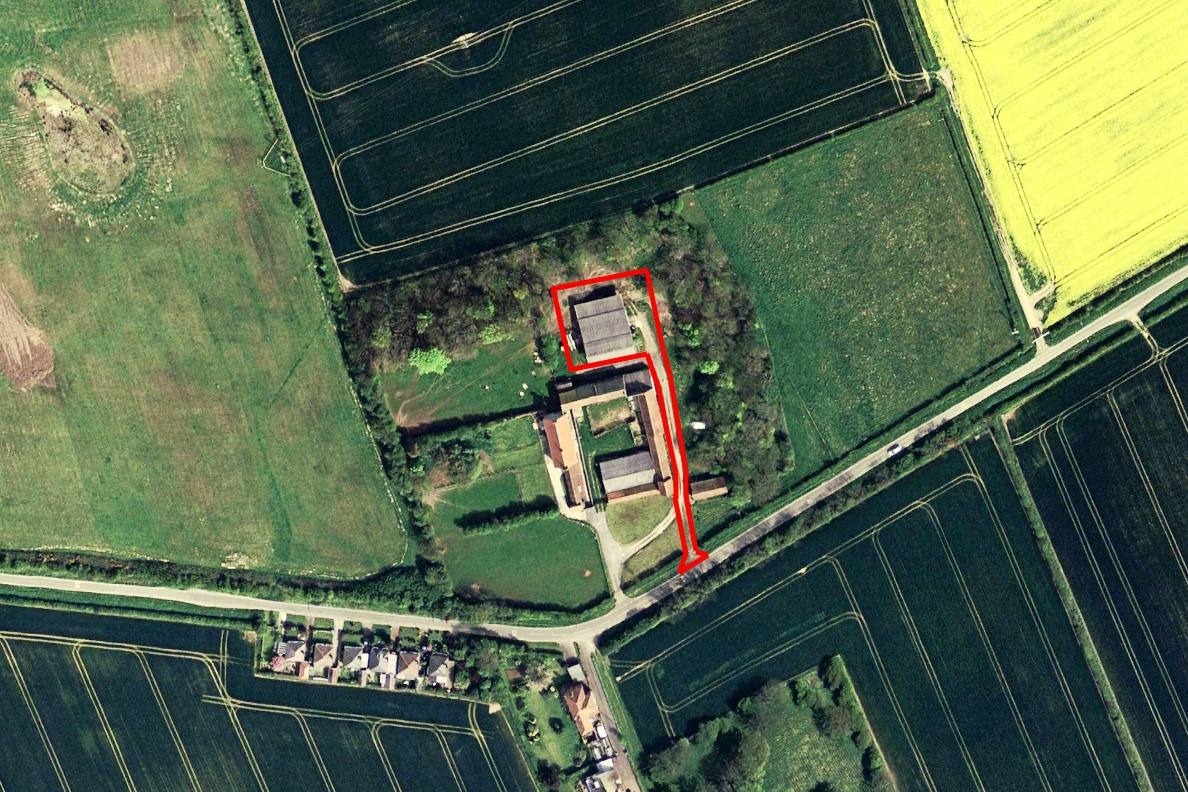
The Site and Context
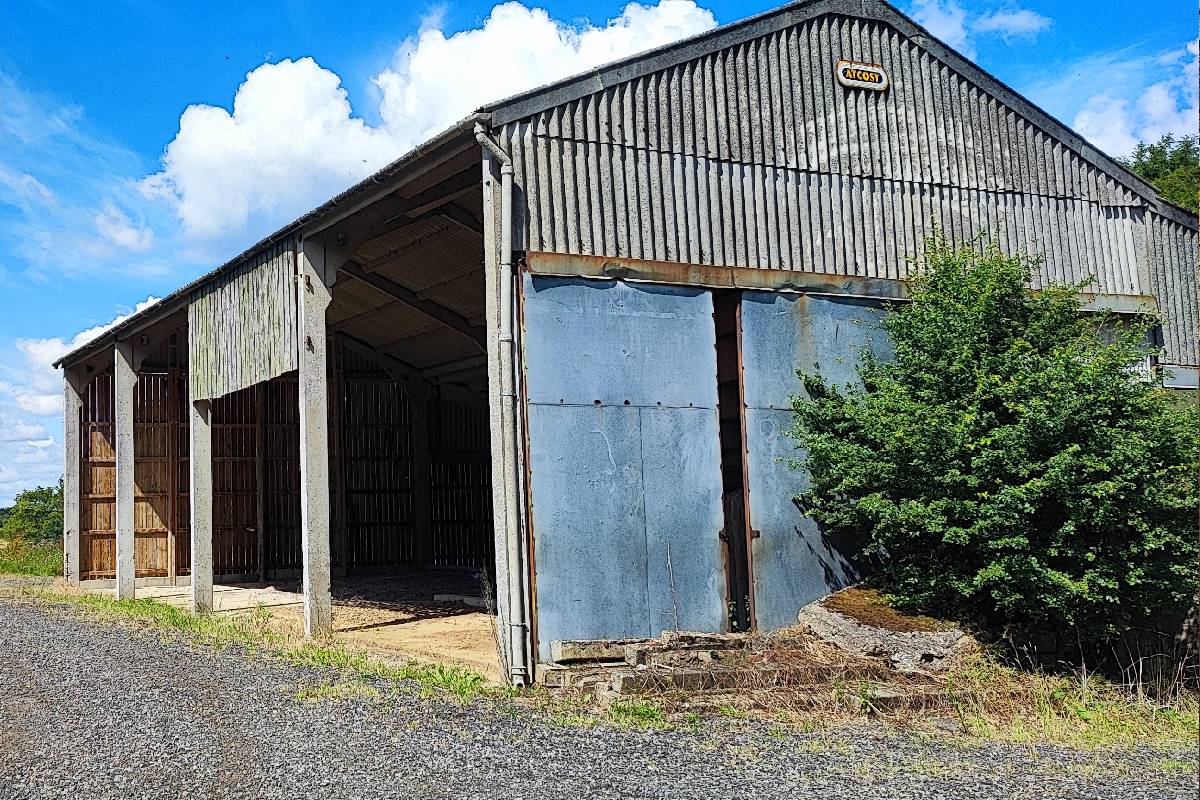
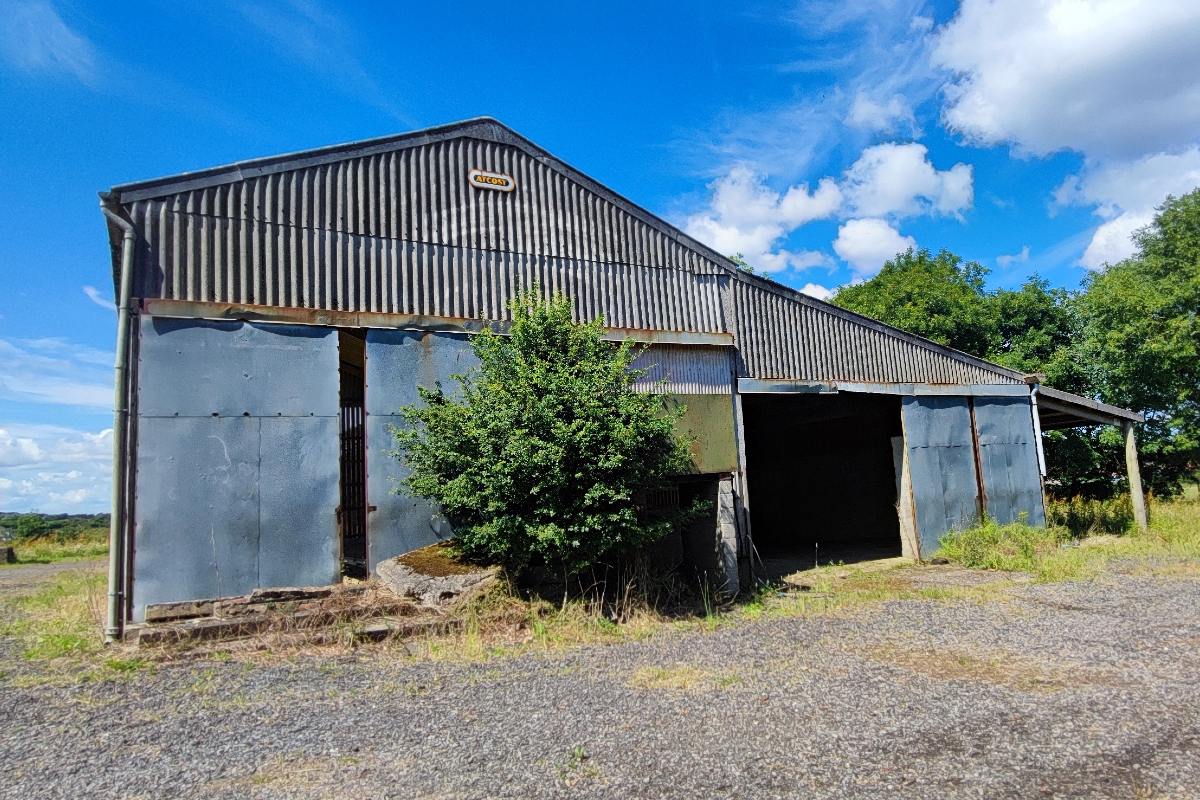
The specific building targeted for this Class Q barn conversion sits to the north of the main farm group. Unlike the traditional historic barns at the heart of the farmstead, this structure is a large precast concrete agricultural building, historically used for machinery storage and grain drying. It features internal levels separated by blockwork retaining walls, concrete floors, and a pitched and lean-to roof clad in corrugated fibrous cement sheets.
Because the broader farmstead was no longer viable for modern agricultural operations, the landowner sought a strategy to secure its long-term future through residential conversion — and Class Q provided precisely the right planning vehicle.
Design Strategy: A Contemporary Barn Conversion
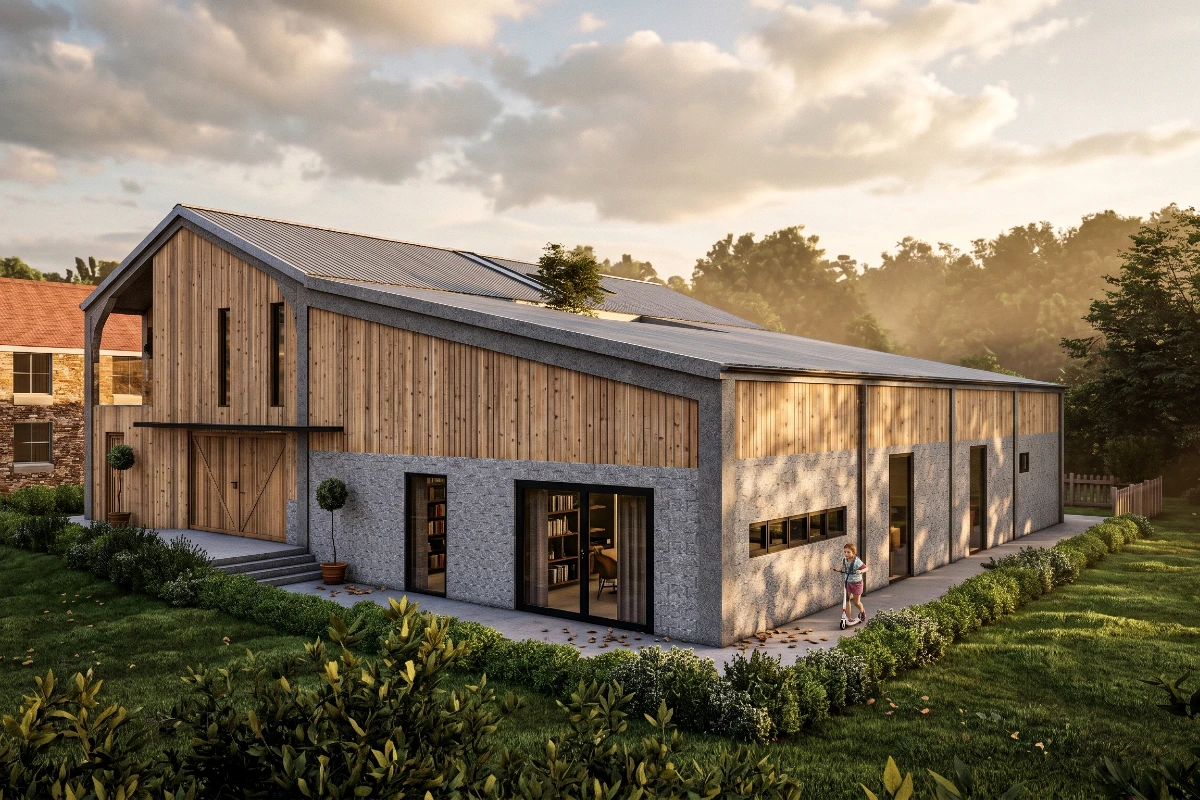
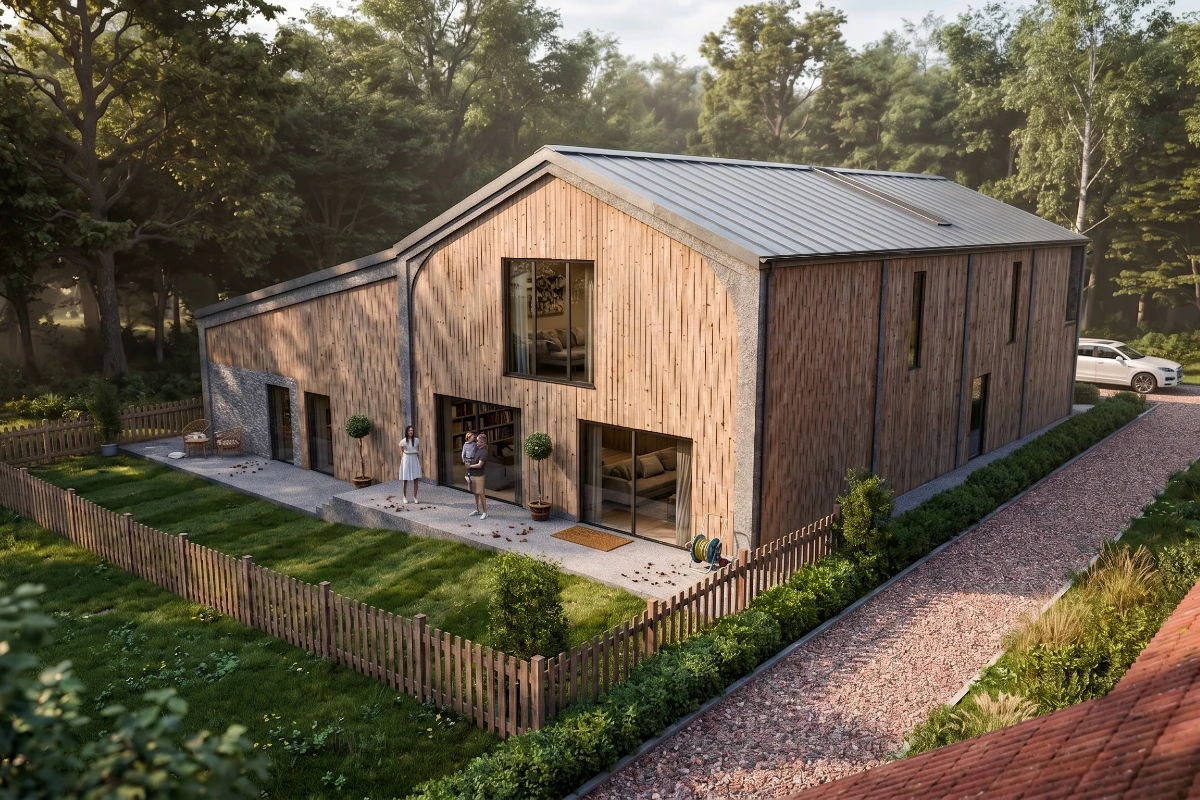
Fining Associates’ design approach respected the agricultural roots of the building while introducing high-quality contemporary elements. The resulting two-storey layout — incorporating an inserted mezzanine first floor — delivers a substantial 457 sq.m. family home in a mature, tree-screened rural setting.
- Accommodation: The ground floor features four bedrooms, a sitting room, snug, office, utility room, and two internal garden areas.
- Mezzanine Level: The first floor hosts a large en-suite master bedroom alongside a principal open-plan lounge, dining, and kitchen area.
- Materiality: The design repairs and reuses the existing blockwork and timber cladding on the north, east, and western elevations.
- Enclosure: The currently open southern elevation will be enclosed with matching timber cladding.
- Roofing: A dark grey roof covering (accordant with BS18B25) or red pantile profile sheeting, chosen to respect the rural character of the surroundings.
- Aesthetic: Visualisations showcase clean lines, dark-framed window openings, and a simple pitched roof form nestled within the landscape.
Navigating Class Q Permitted Development
Securing the swift 40-day “Prior Approval Not Required” decision was achieved by assembling a robust suite of technical reports, coordinated by nineteen47, that proactively addressed all Class Q prior approval criteria.
- Scale Limits: The proposed dwelling sits comfortably below the strict 465 sq.m. cumulative maximum allowed for a larger dwellinghouse under Class Q regulations.
- Structural Integrity: A dedicated Structural Report confirmed the barn was in a reasonable condition and structurally capable of conversion without requiring full reconstruction.
- Ecology: A Preliminary Ecological Appraisal and Bat Survey confirmed low suitability for roosting bats and found no signs of bat activity, removing a major potential constraint.
- Environmental Factors: The site is located in Flood Zone 1 (lowest risk) and a Phase 1 Geo-Environmental Appraisal confirmed no evidence of contamination from its historic farmyard use.
- Highways: A Transport Note demonstrated that a single residential unit, utilising the existing farm access, would generate no adverse highway impacts — satisfying the Q.2(1)(a) prior approval criterion without complication.
A Dual-Track Planning Strategy
To maximise the potential of the Moor Farm site, this Class Q North Yorkshire application was executed as part of a wider dual-track planning strategy. While the precast concrete agricultural building was converted under permitted development rights, a separate Full Planning Application (ZF24/01085/FL) was submitted and approved for the historic core of the farmstead.
This parallel full planning scheme involves the sensitive conversion of traditional brick and pantile buildings around a central fold yard — which includes the partial demolition of a separate, modern portal-framed building to restore the courtyard — creating 8 new residential dwellings.
By distinctly separating the modern concrete barn (ideal for Class Q) from the heritage-rich historic buildings (requiring full planning permission), the team successfully secured the comprehensive redevelopment and sustainable future of the entire Moor Farm site.
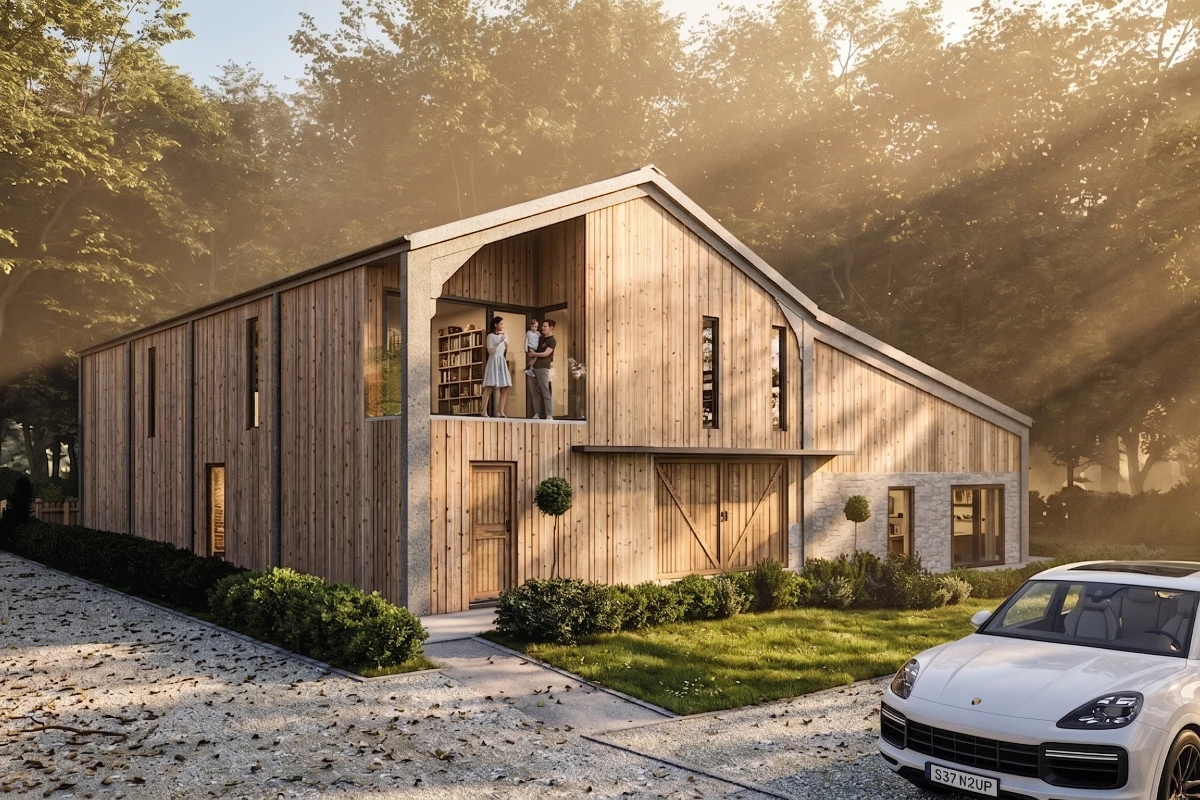
CGI Renders Courtesy of Nineteen47 Planning Consultants