
A Masterclass in Contextual Architecture
At Fining Associates Architects Ltd, we understand that introducing a contemporary residential dwelling into the curtilage of a historic site requires an extraordinary balance of innovation and sensitivity. As an architecture practice based in Nether Poppleton, York, we are incredibly proud of our recently approved project, the Nissen Hut Dwelling | Grade II Listed Farmstead, York.
Situated to the rear of the historic Model Farm complex in Upper Poppleton, our design navigates a highly complex heritage environment to deliver a visually striking, highly sustainable three-bedroom home. The project (Planning Application Reference: 23/01704/FUL) was officially approved on 2 December 2024.
Historic Foundations: The Model Farm Complex
To understand the rationale behind our design, one must first appreciate the depth of its historic setting. Upper Poppleton is an early medieval village that appears in the Domesday Record of 1088, with its present form shaped significantly by the Enclosure Act of 1769.
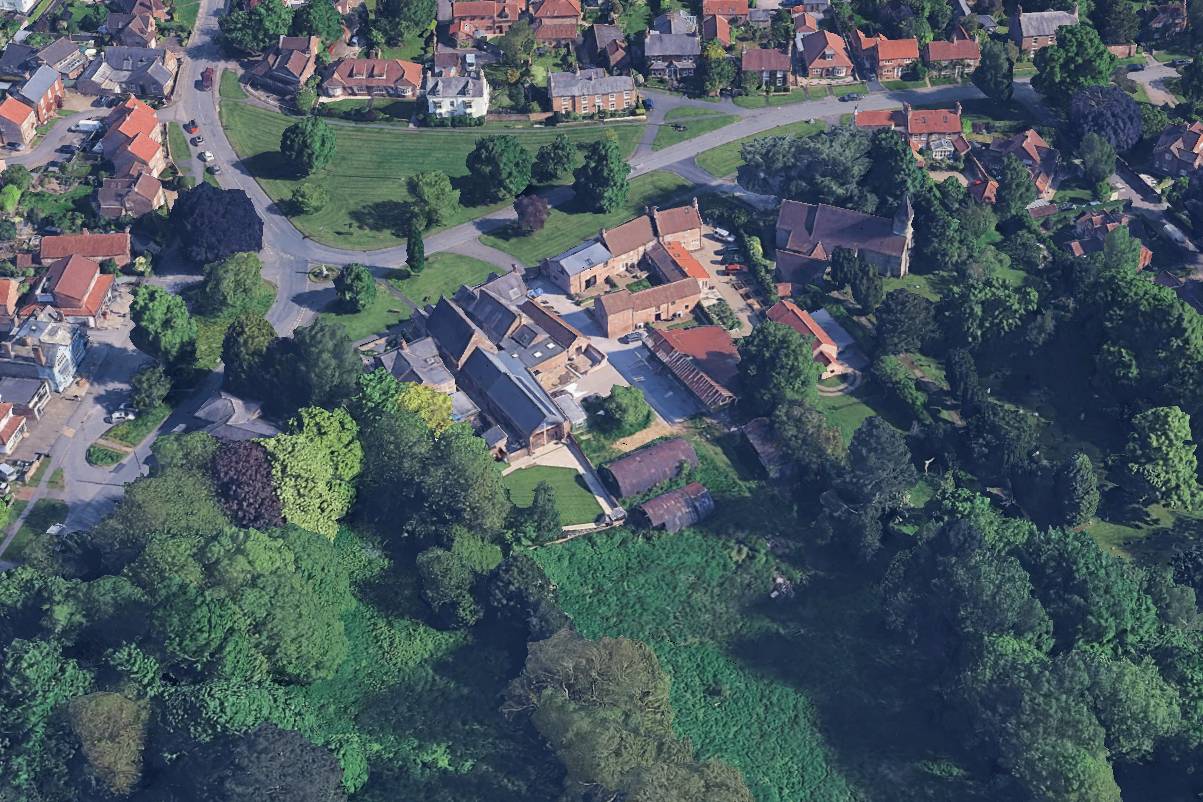
Occupying a prominent position overlooking the village’s historic triangular Green is Model Farm, a Grade II listed complex (UID: 1150355). This layered historic site is anchored by a mid-eighteenth-century farmhouse built of brick in an English garden wall bond with a pantile roof. Over the centuries, the farm evolved to include a contiguous barn facing The Green, mid-eighteenth and nineteenth-century stable blocks, an archaeologically complex pigsty range, and single-storey cart sheds.
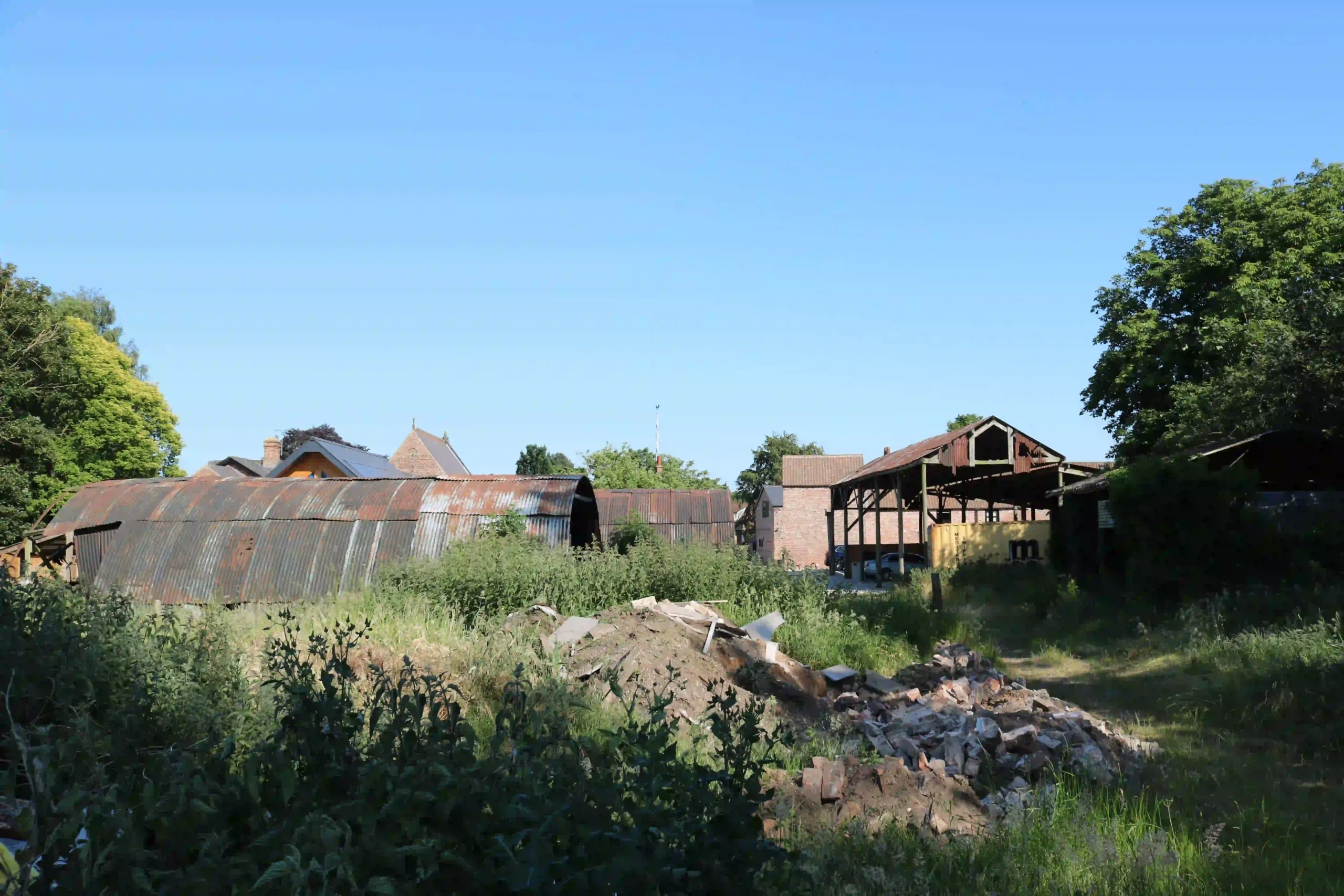
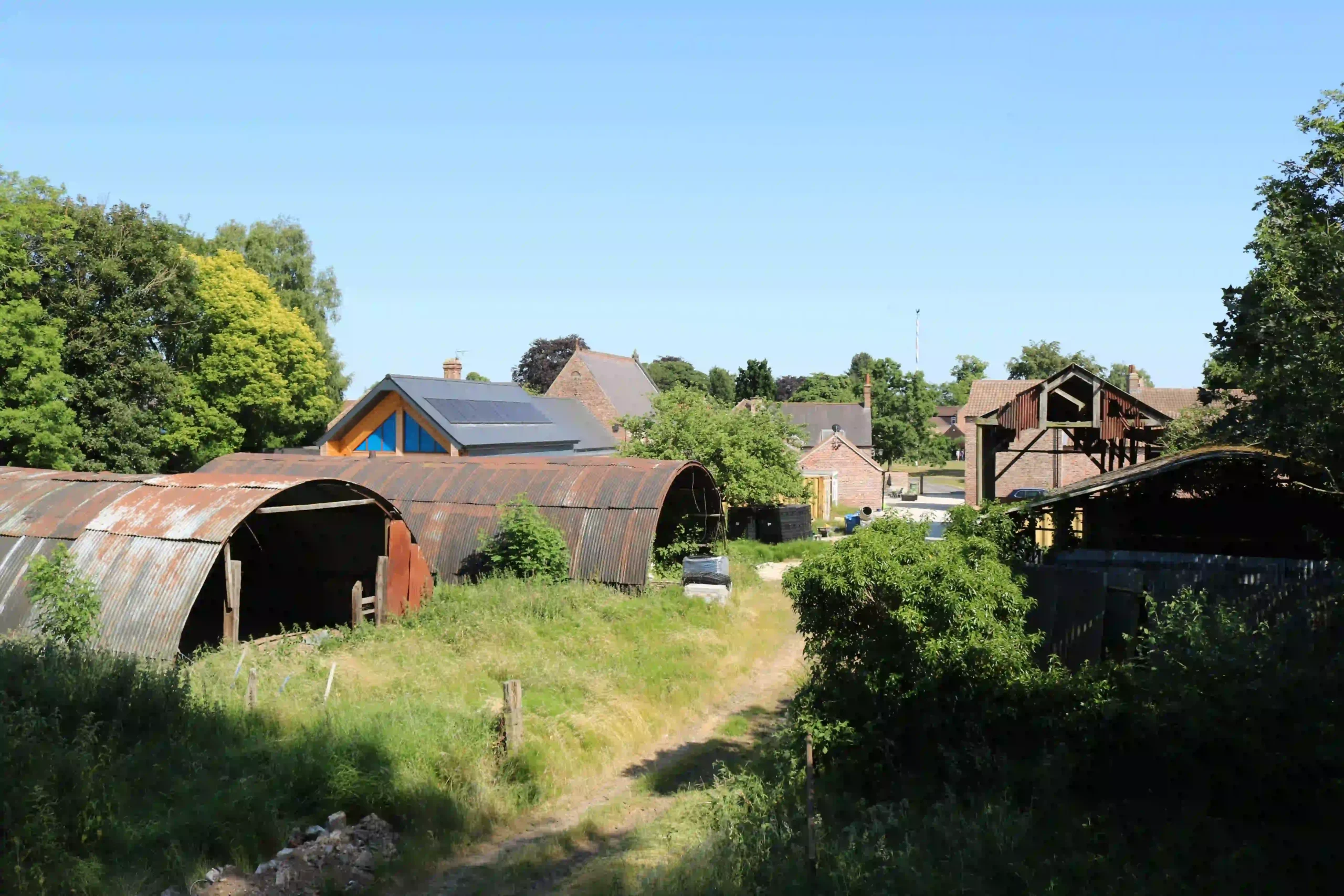
The site for our new dwelling was located in the rear yard—a semi-open space historically known as a croft field. Over the decades, this yard had accumulated several derelict mid-twentieth-century agricultural structures. Among these were two half-round Nissen hut-type shelter barns from the 1950s, which likely represented repurposed WWII Nissen Hut frames.
Architectural Innovation: Interpreting WWII Heritage
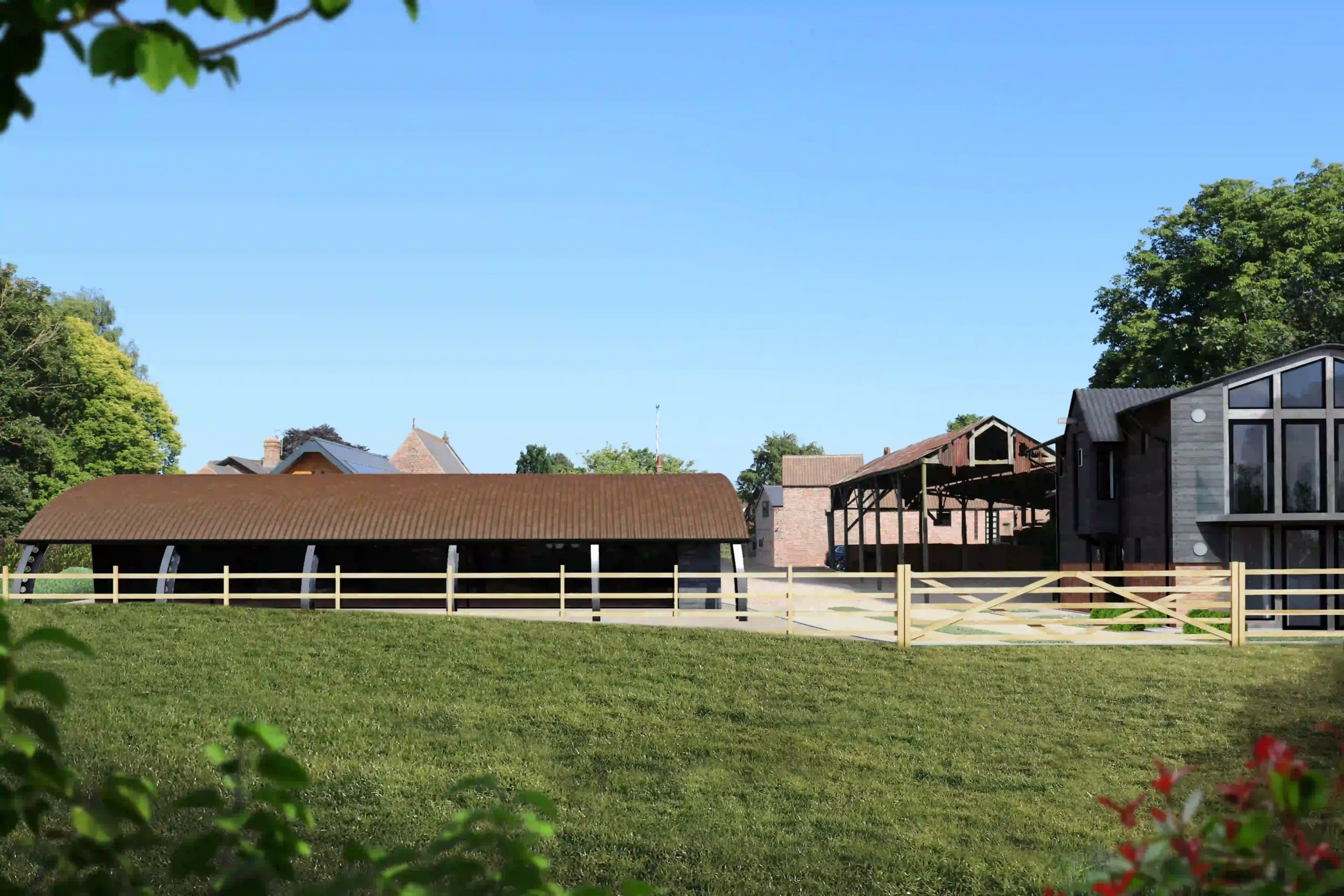
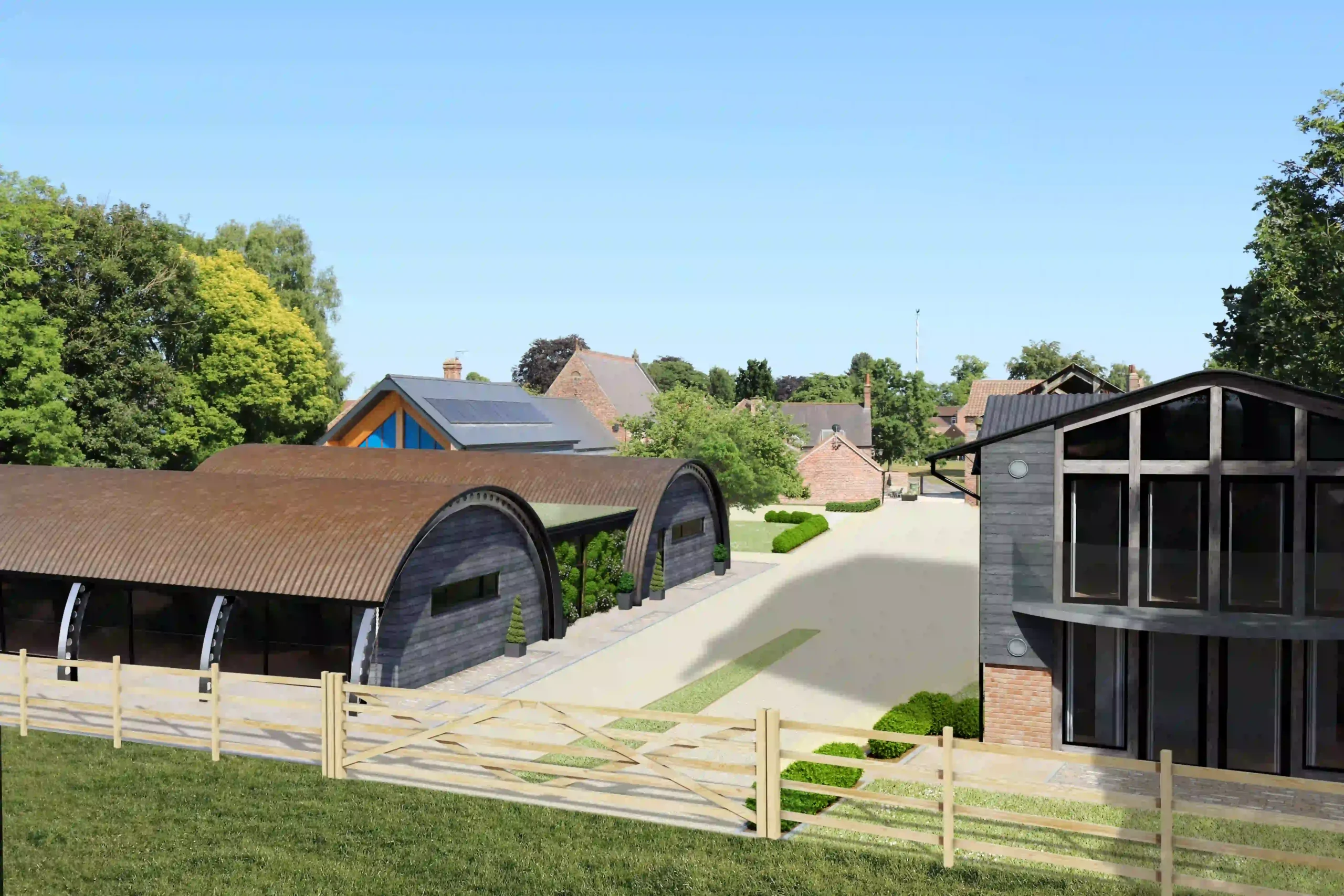
Rather than attempting a pastiche imitation of the eighteenth-century local vernacular using clamp bricks and clay pantiles, our practice chose a radically authentic route. Our approved Nissen Hut Dwelling directly interprets the distinctive form of the derelict shelter barns it replaces, acknowledging the WWII heritage of the Nissen Hut form as a recognised element of mid-twentieth-century agricultural buildings in the region.
The design brilliance lies in its specific material and structural choices:
- Form and Massing: Our design consists of two buildings that mirror the 4.2-metre curved profiles of the original Nissen huts.
- Material Palette: We abstracted the existing farmyard’s aesthetic by deploying rust-effect corrugated corten steel metal sheeting, castellated galvanised steel beams, and rain chains.
- The Linking Structure: The two curved forms are joined by a 3.7-metre-high flat connector structure that features a living wall and a green roof sown with a native wildflower and grass seed mix, ensuring the building feels recessive and preserves the site’s openness.
- Aesthetic Cohesion: External doors and windows are specified in black to tie the contemporary building visually to the historic farm collection.
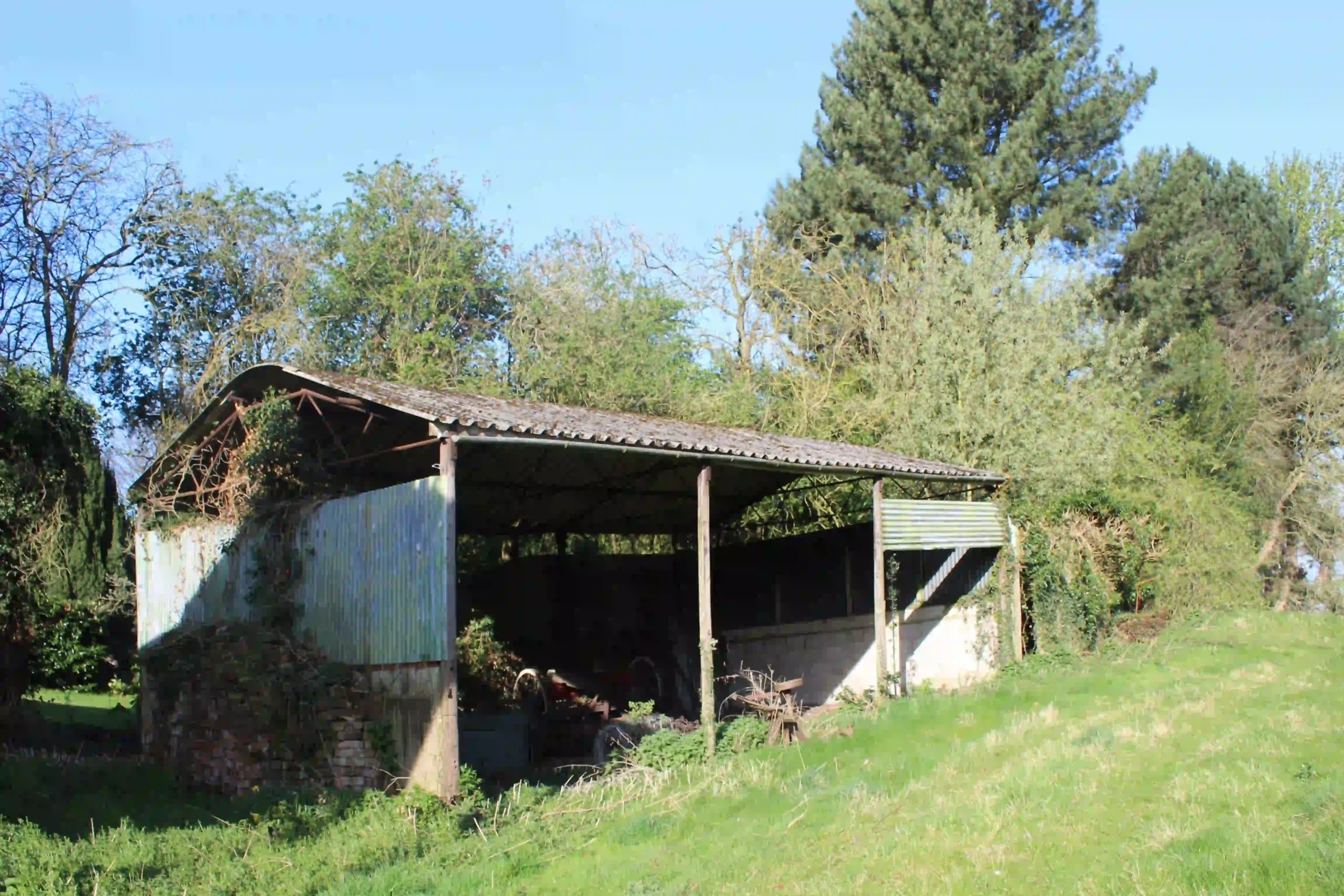
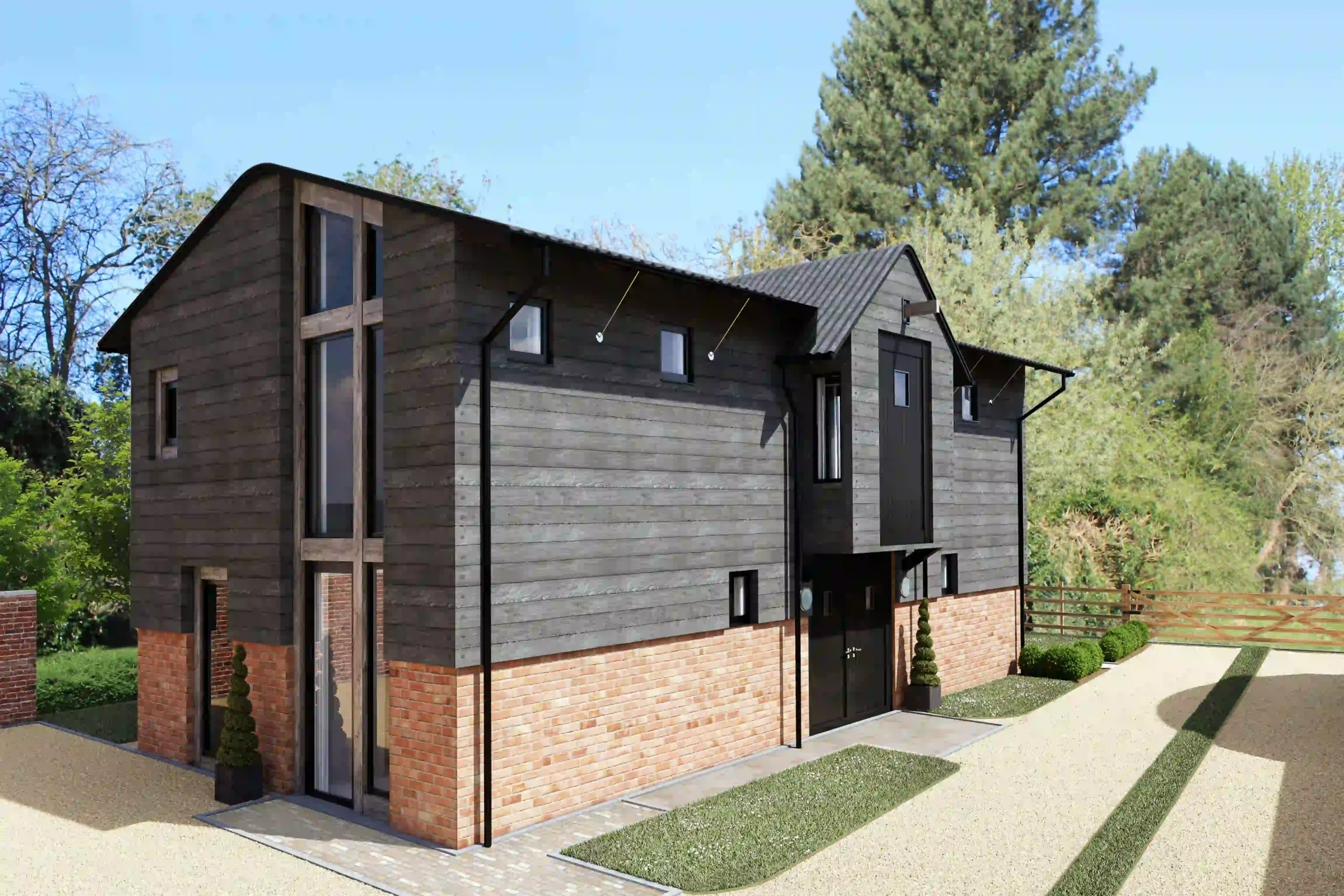
Our wider scheme also includes the careful restoration of the existing large pole barn and the repurposing of an intrusive 1970s small hay barn into a dedicated car and cycle store.
A Collaborative Planning Journey and Heritage Assessment
Gaining approval for a new dwelling in a designated Conservation Area, next to multiple Grade II listed buildings, is a complex process. The site had a challenging planning history; previously, a different architectural practice submitted a scheme for five dwellings on the croft field, which had to be withdrawn due to concerns over harm to heritage assets and the Conservation Area.
When our practice took on the project, we prioritized a context-driven approach. We originally submitted an application for two bespoke dwellings, but through a highly collaborative process with the local planning authority, we chose to withdraw the second proposed property to alleviate concerns regarding the domestication of the croft field.
This successful outcome was the result of close collaboration with a team of named specialist consultants, including heritage consultant Dr Dav Smith (MCIfA) of Maybank Building Conservation LLP, arboricultural experts Quants Environmental Ltd, and application agent Jamie Pyper of Nineteen47 Limited.
Under the National Planning Policy Framework (NPPF), specifically Paragraph 208, the heritage impact of our design was rigorously assessed. While the Conservation Officer identified “less than substantial harm at a moderate level,” it was ultimately concluded that this was outweighed by the public benefits of the development—namely, the contribution to housing supply in a sustainable location and the restoration of the site’s historic large pole barn, which benefits the agricultural character of the Conservation Area.
The application was recommended for approval by the City of York Council planning officer, however was called-in by the local councillor. The scheme was decided by Planning Committee B and ultimately approved with a majority voting in favour of the scheme. In the process, committee members offering some of the most enthusiastic praise the scheme received throughout the entire process.
Praise from the Planning Committee
We were thrilled to see our contextual, highly considered approach recognised by the local authority. During the review process, members of Planning Committee B were vocal in their admiration for our design:
“This has been designed to replicate as close as possible the existing structures in an imaginative way… it is a well-designed scheme that in many other respects fits very well with its locality.”
Councillor Vassie
“I think this is a well-designed scheme in terms of the approach to conservation, the approach of trying to reuse… I actually think it’s quite an attractive building.”
Councillor Burton, Chair of Planning Committee B
“In terms of the scheme itself, I think it is very ingeniously designed.”
Councillor Cullwick
“The proposals look to me to be a very imaginative reuse of those buildings.”
Councillor Waters
“I think it’s quite a nice well-designed scheme and fits in with the character.”
Councillor Baxter
Conclusion
Our approved Nissen Hut Dwelling | Grade II Listed Farmstead, York proves that modern architectural intervention need not be detrimental to historic sites. By leaning into the mid-century agricultural and WWII heritage of the site, while prioritising sustainable, low-carbon materials, we at Fining Associates Architects Ltd have created a dwelling that is boldly of its time, yet deeply respectful of its place.
CGI’s Courtsey of Nineteen47 Planning Consultants